

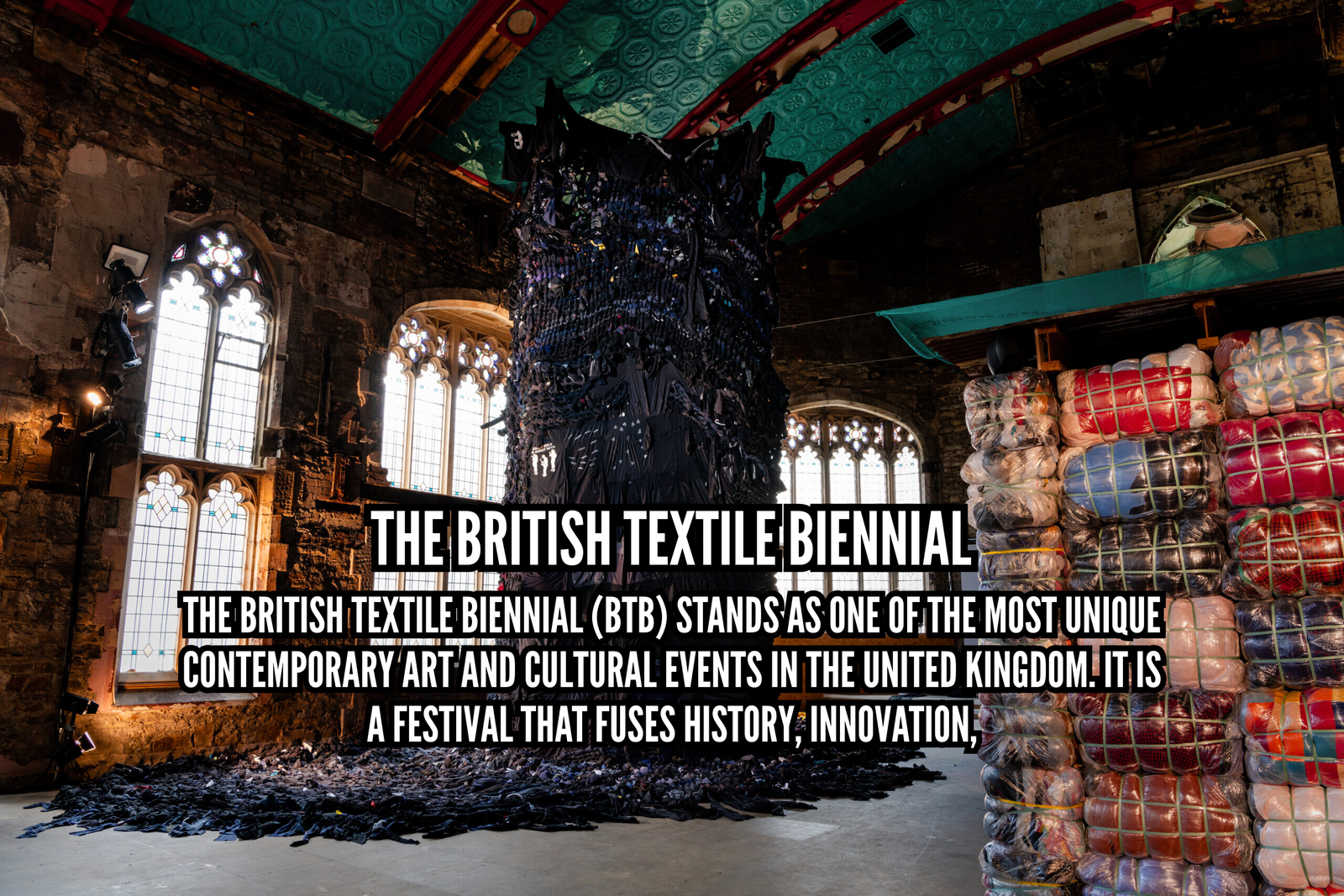
The British Textile Biennial (BTB) is one of the most unique contemporary art and cultural events in the United Kingdom. Every two years in East Lancashire, the British Textile Biennial brings together history, creativity, innovation, and community engagement to celebrate textiles in all forms. More than a simple exhibition, it reimagines how fabric, design, culture, and technology connect the past, present, and future. Through exhibitions, workshops, and public programs, the Biennial highlights Lancashire’s industrial heritage, its social and economic contributions, and the continuing relevance of textiles in modern life.
The festival attracts a diverse audience, from art enthusiasts and designers to local residents and international visitors. The British Textile Biennial presents textiles not only as materials but as storytelling mediums, revealing cultural, environmental, and technological narratives woven into every piece.
What Is the British Textile Biennial?
The British Textile Biennial is a free cultural and art festival that transforms East Lancashire every two years. Artists, designers, historians, and communities collaborate to create works inspired by the region’s textile history, from the Industrial Revolution to contemporary innovations. Unlike typical art fairs, the British Textile Biennial is site-specific, placing exhibitions in historic mills, museums, city venues, and community halls. These locations, once central to textile production, now host contemporary art that honors the region’s industrial legacy.
At its core, the British Textile Biennial asks visitors: What does textile mean in our lives? It explores textiles as an artistic medium while addressing environmental concerns, cultural exchange, and sustainable futures. The festival merges art with heritage, creating an educational and inspiring experience for all visitors.
Origins and Purpose
The British Textile Biennial grew from Lancashire’s rich textile heritage. The county played a central role during the Industrial Revolution, pioneering weaving, spinning, and textile machinery innovations that shaped the global industry. Each Biennial edition focuses on a specific theme, such as innovation in textile production, sustainable materials, or cultural impact. For example, the 2025 edition (BTB25) explored both traditional natural fibres and futuristic fabrics used in extreme environments. Artists revisited historical innovations like Grenfell waterproof cloth while reflecting on modern issues like sustainability and global trade.
The British Textile Biennial bridges past and present, providing critical insight into how textiles influence culture, society, and industry. It fosters appreciation for heritage while inspiring contemporary creativity.
| Attribute | Details |
|---|---|
| Name | The British Textile Biennial |
| Type | Art & Cultural Festival |
| Location | East Lancashire, England |
| Frequency | Every 2 years |
| First Held | Mid-2010s |
| Main Focus | Textiles, Art, Heritage, Innovation |
| Audience | Artists, Students, Locals, Tourists |
| Entry | Free |
| Venues | Historic Mills, Museums, Galleries, Community Halls |
| Activities | Exhibitions, Workshops, Talks, Community Projects |
How the Biennial Works
The British Textile Biennial spans multiple venues across East Lancashire, integrating seamlessly with heritage and community spaces. Locations such as Queen Street Mill Textile Museum showcase original woven pieces and working machinery, offering insight into industrial history. The Harris Museum & Art Gallery in Preston hosts commissioned contemporary works, while Towneley Hall and The Whitaker Museum & Art Gallery present site-specific installations blending art with architecture. Turton Tower provides a historic setting for modern exhibitions, allowing visitors to experience creativity amid heritage.
The British Textile Biennial includes new commissions, combining traditional textile techniques like weaving and dyeing with digital fabrication, sculpture, film, and performance art. It also offers talks, panel discussions, guided tours, and workshops, giving visitors a hands-on understanding of both craft and innovation. Community participation programs encourage locals to share stories, co-create art, and connect with their heritage. Most importantly, the British Textile Biennial is free to the public, making it widely accessible.
Global Connections and Innovation
Though rooted in Lancashire, the British Textile Biennial attracts artists, designers, and delegates from around the world. British Council-supported projects bring international textile traditions, sustainable practices, and indigenous techniques into dialogue with local history. These global connections highlight the cultural and environmental significance of textiles and create cross-cultural learning opportunities.
Artists like Crystal Bennes have created works linking early computing punch cards with Jacquard loom patterns, exploring intersections between technology, textiles, and ecology. Through these initiatives, the British Textile Biennial fosters innovation, dialogue, and forward-thinking artistic practice.
Who Participates?
Participants at the British Textile Biennial represent a wide range of backgrounds. International and UK-based artists are commissioned to produce original works, while local artisans and craftspeople contribute to exhibitions and workshops. Historians and heritage organizations provide context, and community volunteers help run events, sharing stories and assisting in project development. Schools and young learners engage with workshops and educational programs, gaining hands-on exposure to textile heritage and contemporary art.
The British Textile Biennial also supports emerging artists, enabling early-career creatives to work with historic collections and local communities. Through mentorship and collaboration, the Biennial fosters the next generation of textile innovators.
Why the Biennial Matters
The British Textile Biennial is important for several reasons. It celebrates Lancashire’s industrial heritage, preserving knowledge of textile innovation and sharing it with contemporary audiences. It inspires creativity, encouraging visitors and artists to see textiles as both functional materials and artistic expressions. From eco-friendly dyeing methods to experimental fibers, the festival fosters new thinking at the intersection of art, science, and design.
Community engagement is central, with residents participating in workshops and volunteering, creating cultural pride and confidence. Educational programs provide learning opportunities in textile history, techniques, and sustainability. Economically, the British Textile Biennial boosts tourism, supports local businesses, and revitalizes historic venues, positioning Lancashire as a vibrant cultural destination.
Looking Ahead
Each British Textile Biennial demonstrates the transformative potential of textiles. Beyond materials, textiles explore identity, creativity, and sustainability. The festival invites visitors to immerse themselves in heritage spaces while engaging with contemporary art, prompting reflection on the role of textiles in modern life.
By continually evolving, the British Textile Biennial challenges traditional boundaries, asking visitors: How can textiles shape the future? Through exhibitions, workshops, and community initiatives, the Biennial inspires creative thinking, social engagement, and sustainable innovation.
Conclusion
The British Textile Biennial is a culturally rich festival that combines industrial history, contemporary art, and global perspectives. By connecting artists, communities, and historic spaces, the British Textile Biennial transforms the way we view textiles — as materials that tell stories, inspire creativity, and foster cultural connections.
From historic mills to modern installations, the Biennial invites audiences to explore the threads connecting past, present, and future, offering an experience that is educational, inspirational, and unforgettable. Whether you are an art enthusiast, historian, student, or casual visitor, the British Textile Biennial is a must-visit event that showcases the power of creativity and heritage.
FAQs
Q: What is the British Textile Biennial?
A: It is a free art and cultural festival held every two years in East Lancashire, celebrating textiles through exhibitions, workshops, and community programs.
Q: Who can visit the British Textile Biennial?
A: Everyone is welcome — locals, tourists, artists, students, and families can explore the exhibitions and events.
Q: Where are the festival venues?
A: Venues include historic mills, museums, art galleries, and community halls across East Lancashire.
Q: Is there an entry fee?
A: No, all exhibitions and most events at the British Textile Biennial are free to the public.
Q: Why is the British Textile Biennial important?
A: It preserves Lancashire’s textile heritage, inspires creativity, supports communities, and promotes sustainability and innovation in textiles.
