

In early July 2025, a Ryanair flight fire Boeing 737‑800 aircraft bound for Manchester became the center of a tense emergency at Palma de Mallorca Airport in Spain. What should have been a routine night flight quickly turned into chaos when a fire warning light appeared in the cockpit just as the aircraft was taxiing for takeoff. The pilots immediately followed strict safety protocols, bringing the plane to a halt and declaring an emergency. Every airline takes fire warnings seriously, and in this case, the Ryanair flight fire alarm triggered a rapid response to protect all passengers on board.
Passengers’ Terrifying Experience
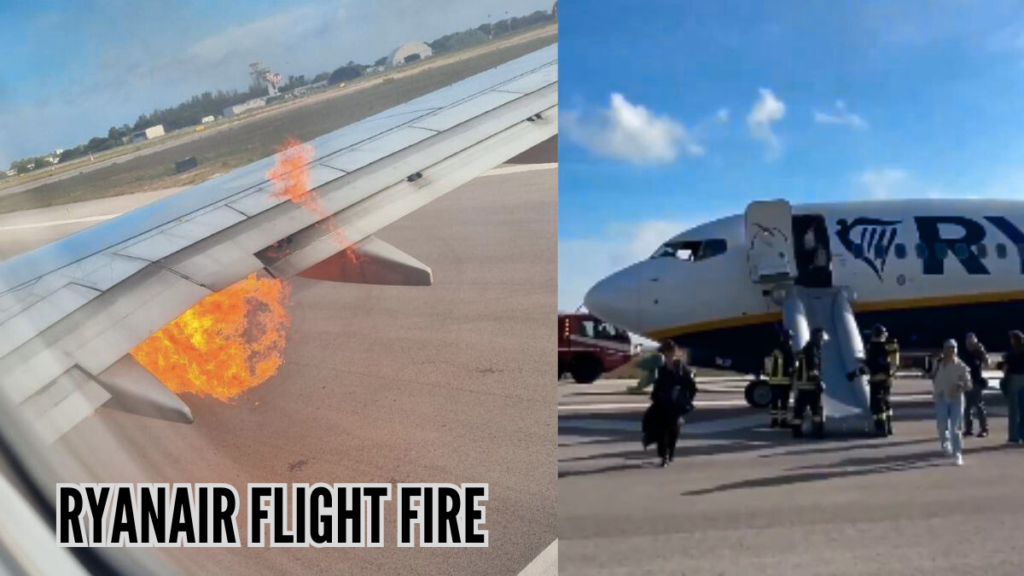
Passengers, many already settled and ready for departure, were suddenly thrust into a situation filled with uncertainty and fear. The alarm system sounded, and the flight crew instructed an emergency evacuation. Panic quickly spread among some travelers, with a few ignoring crew directions and choosing to leave the aircraft via overwing exits. These exits, while designed for emergencies, often lack fully equipped slides, and passengers faced the challenge of descending several feet to the tarmac. The rush to escape and the stress of the Ryanair flight fire situation led to injuries for a number of passengers.
Injuries and Medical Response
In total, 18 people sustained injuries during the evacuation. Most were minor, such as sprains, bruises, and cuts, but six passengers were taken to local hospitals for observation. Among them was a 56-year-old woman, Danielle Kelly, who suffered a broken heel, fractured wrist, and broken elbow after jumping from the wing. While terrifying, the incident resulted in no fatalities, largely due to the immediate response of the flight crew and emergency personnel stationed at the airport during the Ryanair flight fire.
The False Alarm
After inspection, authorities confirmed that the fire warning was false. The sensors in the cockpit had triggered a warning, but there was no actual fire aboard the aircraft. False alarms in aviation can occur due to electrical glitches, sensor malfunctions, or other technical errors. While inconvenient, they reflect the safety-first philosophy of modern airlines. Ryanair confirmed the alarm was false and apologized to passengers for the disruption, quickly arranging a replacement aircraft so the flight could continue later that morning. The Ryanair flight fire incident highlighted how sensitive aircraft safety systems are designed to act immediately in case of a real fire.
| Attribute | Details |
|---|---|
| Event | Ryanair Flight Fire Incident |
| Date | July 5, 2025 |
| Location | Palma de Mallorca Airport, Spain |
| Aircraft | Boeing 737‑800 (G‑RUKN) |
| Flight Route | Palma de Mallorca → Manchester |
| Cause | False fire warning in cockpit |
| Passengers Injured | 18 (6 hospitalized) |
| Crew Response | Emergency evacuation using slides and overwing exits |
| Outcome | No fatalities; replacement aircraft arranged |
| Airline Statement | Apologized for false alarm; emphasized safety-first approach |
Why Passengers Panicked
It’s important to understand the human side of crises. Fire alarms and emergency announcements can trigger an instinctual fear response in many people. Even though there was no real fire, the sudden alarm and urgent commands caused some passengers to act before fully understanding the situation. Several passengers chose to evacuate through overwing exits rather than waiting for crew-assisted slides. Overwing exits on Boeing 737 aircraft are designed for emergency use but often lack automatic inflatable slides and require passengers to carefully descend from a wing several feet above the ground — an intimidating drop, especially under stress. This reaction was a direct result of the Ryanair flight fire alert.
Ryanair’s Official Statement
In a public statement, Ryanair described the incident as a non-fire emergency triggered by a false fire warning light. The airline emphasized that there was no fire or smoke onboard, the flight crew acted in accordance with safety procedures, passengers disembarked using slides, and medical assistance was requested for injured passengers immediately. A replacement aircraft was arranged to minimize further disruption. Ryanair apologized for the distress and inconvenience caused by the Ryanair flight fire situation, reinforcing the company’s commitment to passenger safety.
Safety Protocols in Action
The incident shows how airline safety systems are designed to err on the side of caution. Fire detection systems in commercial aircraft constantly monitor for heat, smoke, and other indicators of fire — and when a system detects something, even if false, pilots are trained to treat it as a real emergency until proven otherwise. Crew members are trained to guide passengers, and passengers are urged to leave belongings behind and focus only on getting to safety. When passengers act on their own, especially without waiting for crew instructions, it increases the risk of injury. The Ryanair flight fire case is an example of safety procedures preventing a worse outcome despite panic.
Aftermath and Lessons Learned
After the incident, aviation safety investigators reviewed maintenance logs, sensor alerts, crew actions, and emergency communications to determine exactly what caused the false fire indication. Ryanair’s quick arrangement of a replacement flight allowed most travelers to continue their journey, albeit much later than planned. No fatalities were reported, and although the injuries were serious in some cases, the absence of a real fire meant the worst outcomes were avoided. This Ryanair flight fire situation illustrates the effectiveness of aircraft safety systems, even when triggered falsely.
Advice for Travelers
For frequent and occasional flyers alike, this incident serves as a reminder that safety systems are designed to protect you, even if they sometimes trigger false alarms. Crew instructions are vital, and during emergencies, trained personnel know the best course of action.
Panic can cause more harm than the initial emergency itself, and remaining calm and following directions during emergency procedures can significantly reduce risk for yourself and others. Passengers should treat any Ryanair flight fire alert seriously and follow crew guidance.
Conclusion
The Ryanair flight fire incident at Palma de Mallorca was a rare but powerful example of aviation safety in action and how human behavior intersects with technology during emergencies. A false fire alarm triggered an urgent evacuation that led to 18 injuries, including several serious cases. The flight crew and emergency personnel responded efficiently, demonstrating the effectiveness of airline safety systems.
For passengers, the key takeaway is clear: remain calm, follow instructions, and trust the safety procedures designed to protect everyone on board. While the incident could have ended much worse, the coordinated response ensured everyone survived, providing an important lesson for airlines and travelers alike. Overall, the Ryanair flight fire event reinforces the importance of preparedness, training, and cooperation in modern air travel.
FAQs
Q: What caused the Ryanair flight fire?
A: The Ryanair flight fire was triggered by a false fire warning in the cockpit. There was no real fire on board.
Q: Were there any injuries during the Ryanair flight fire evacuation?
A: Yes, 18 passengers were injured, mostly minor sprains and bruises. Six required hospital observation.
Q: How did passengers evacuate the plane?
A: Passengers used emergency slides and some overwing exits, following crew instructions. Panic caused a few to jump from the wing.
Q: Did Ryanair cancel the flight after the fire alarm?
A: No, Ryanair arranged a replacement aircraft. The flight continued the next morning after all passengers were safely evacuated.
Q: What can passengers learn from the Ryanair flight fire incident?
A: Always follow crew instructions during emergencies and stay calm. Panic increases the risk of injury even during false alarms.
