


A roof lantern is one of the most transformative architectural features you can add to a home. When designed and installed well, it floods your interior with sunshine, makes spaces feel larger, and even adds long‑term property value. Among the most popular premium products on the market is the korniche roof lantern height known for its sleek design, strength, and high‑end performance.
In this comprehensive guide, we’ll walk you through everything about korniche roof lantern height — what it means, how it’s determined, why it matters, and how it impacts your project planning. We’ll also explore key benefits of the Korniche lantern system and practical insights to help you choose, measure, and install with confidence.
What Is a Roof Lantern?
A roof lantern is a fixed glass structure installed on a flat or low‑pitch roof to bring natural daylight into the space below. Think of it as an architectural skylight that not only lights up a room but becomes a striking design feature in its own right.
Roof lanterns create panoramic views of the sky and are especially popular over kitchens, dining spaces, living rooms, and extension areas. They blend functionality with aesthetics — brightening dark interiors while enhancing the character of your home.
Introducing the Korniche Roof Lantern
The Korniche Roof Lantern is a premium aluminium roof lantern system designed for modern homes and renovations. Its engineering emphasizes strength, minimal internal structure, thermal performance, and elegant sightlines — meaning more glass, less metal interrupting your view.
Manufactured in the UK, Korniche lanterns are built to last and tailored to your project, offering bespoke sizing and colour options alongside high‑performance glazing choices. This makes the korniche roof lantern height a crucial consideration during planning to ensure optimal proportions and maximum daylight.
Understanding Korniche Roof Lantern Height
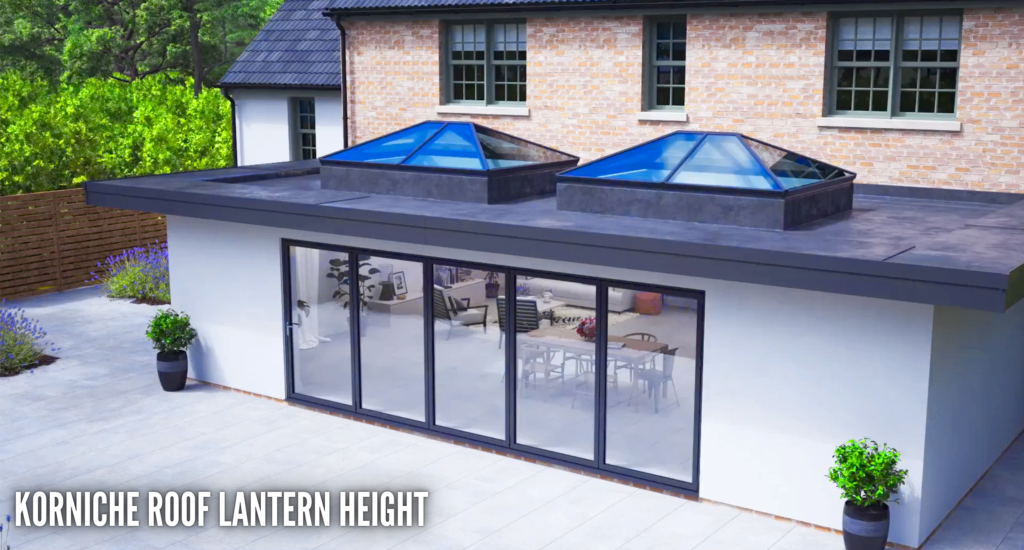
When people talk about korniche roof lantern height, they’re usually referring to the overall height of the lantern frame from its base (where it sits on the upstand) to the ridge at the top.
For small to medium Korniche lanterns, typical overall product heights might be approximately:
- 1.00 m width lantern — ~358 mm tall
- 1.50 m width lantern — ~474 mm tall
- 2.00 m width lantern — ~591 mm tall
These figures are approximate, and actual korniche roof lantern height depends on the lantern size and configuration. It’s important to note that this height does not include the upstand, which adds additional vertical measurement.
| Feature | Details |
|---|---|
| Product Name | Korniche Roof Lantern |
| Material | Premium Aluminium Frame |
| Glass Type | Double Glazing with Argon Fill |
| Standard Pitch | 24°–25° |
| Height Range | 358 mm – 591 mm (depending on width) |
| Upstand Requirement | Minimum 150 mm above roof surface |
| Width Options | Customizable (up to 6 m) |
| Length Options | Customizable (up to 4 m) |
| Thermal Performance | Thermally broken frame for energy efficiency |
| Design Style | Modern and elegant with slim sightlines |
| Maintenance | Low maintenance, self-cleaning glass available |
Why Height and Upstand Matter
The korniche roof lantern height — along with the upstand height — directly affects several key performance and aesthetic elements of your installation.
1. Natural Light and Views
A taller lantern with a steeper pitch allows more daylight to enter deep into the room. With the Korniche’s fixed 25° roof pitch, the glass panels are angled to maximise incoming light without compromising structure. Understanding korniche roof lantern height helps ensure the lantern fills your space with maximum natural light.
2. Internal Space & Feel
More height above your ceiling can produce a stronger sense of space and openness. Even a few extra centimetres of korniche roof lantern height can make a room feel brighter and more expansive.
3. Roof Construction Requirements
Height affects how the lantern integrates with the roof, especially the upstand, which is the base that lifts the lantern above the roof membrane. Building regulations typically require the lantern upstand to be at least 150 mm tall above the finished roof surface, making correct measurement of korniche roof lantern height essential for weatherproofing.
4. Aesthetics & Proportions
How the lantern sits above your roof line influences the exterior look of your building. Too low and it may seem recessed; too tall and it could look disproportionate. Accurate korniche roof lantern height ensures a balanced and elegant appearance.
What Is a Lantern Upstand?
The upstand — sometimes called the kerb or curb — is the static base upon which the roof lantern frame sits. It’s built on the roof and raised above the finished roof surface to prevent water ingress, allow flashing and membranes to integrate correctly, and support the lantern structure.
For Korniche lanterns:
- The minimum upstand height should be 150 mm above the finished roof surface
- Width recommendations are generally 70 mm minimum
- Upstands can be specified taller depending on roof insulation type
Because the lantern frame slightly overhangs the upstand, the total korniche roof lantern height above your finished roof combines both lantern and upstand measurements.
Typical Korniche Lantern Dimensions Beyond Height
While height is important, lanterns are also defined by their external width and length — often tailored to the space available on your roof.
Korniche lantern sizes can range from small to very large:
- Bespoke lanterns up to 6 m × 4 m external size
- Largest standard rectangular lantern configuration with only four glass units up to 3 m × 2.5 m
- Maximum pyramid‑style lanterns up to 4 m × 4 m
Because dimensions vary widely, korniche roof lantern height typically scales with width and length — larger lanterns usually have greater structural requirements and therefore a taller overall profile.
Benefits of Choosing a Korniche Roof Lantern
Natural Light & Ambience
A well‑designed roof lantern floods rooms with daylight — reducing reliance on artificial lighting and creating a welcoming atmosphere. Understanding the korniche roof lantern height helps homeowners predict how much light will reach interior spaces.
Thermal Efficiency
Korniche lanterns feature thermally broken aluminium frames and advanced glazing with argon fill to reduce heat loss and maintain comfort year-round. Proper korniche roof lantern height planning ensures insulation and thermal performance are maximized.
Strength and Durability
Die‑cast aluminium components make Korniche lanterns exceptionally strong, allowing larger spans of glass with fewer internal bars. This enhances the view and maintains structural integrity.
Customisation Options
Korniche lanterns can be specified in a range of colours, glazing types, and sizes — tailored precisely to your project. Correct korniche roof lantern height ensures your custom lantern fits your roof perfectly while remaining proportionate.
Quick and Efficient Installation
Korniche lanterns are delivered as pre-checked kits with all components included, which makes installation more streamlined and less labour-intensive.
Practical Considerations for Measuring and Ordering
To ensure a perfect fit:
- Measure your upstand carefully and include roofing membrane thickness
- Confirm upstand dimensions (width and height) before ordering
- Account for overhang when calculating the external lantern size
- Check roof structure and insulation so that upstand height supports thermal performance needs
Accurately measuring korniche roof lantern height ensures your lantern will integrate seamlessly with your roof and interior design.
Conclusion
Understanding Korniche roof lantern height is essential for anyone planning to install a roof lantern. The height not only affects the amount of natural light that fills your room but also impacts the overall look, proportions, and structural integration of the lantern with your roof. A properly measured and installed lantern ensures optimal daylight, energy efficiency, and a beautiful, elegant interior space.
The Korniche Roof Lantern stands out for its premium aluminium construction, sleek design, and thermal efficiency, making it a top choice for modern and traditional homes alike. By considering both the lantern frame and upstand, you can achieve the perfect korniche roof lantern height for your project — combining aesthetics, function, and durability.
FAQs
Q1: What is Korniche roof lantern height?
A: It is the total vertical measurement of the lantern from its base on the roof upstand to the top ridge, affecting light and interior space.
Q2: Why is the height important?
A: The height determines how much daylight enters, the room’s sense of space, and how the lantern looks on the roof.
Q3: What is the typical height of a Korniche lantern?
A: For common sizes, heights range from about 358 mm for small lanterns to 591 mm for larger ones, excluding the upstand.
Q4: How does the upstand affect the height?
A: The upstand raises the lantern above the roof surface, usually 150 mm or more, and adds to the total Korniche roof lantern height.
Q5: Can I customize the height?
A: Yes, Korniche lanterns can be tailored for width and pitch, which naturally adjusts the overall height to fit your roof and design preferences.
