

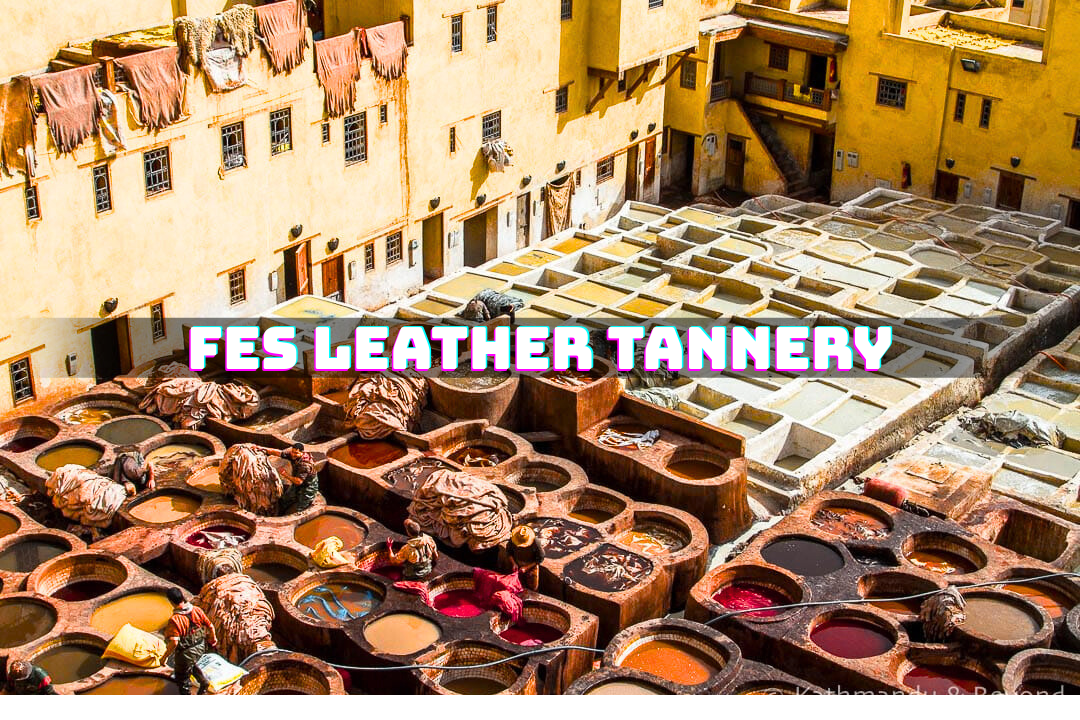
In the heart of Fès el‑Bali, the oldest part of Fès, Morocco, lies one of the world’s most fascinating artisan sites — the Fès Leather Tannery, also known as Chouara Tannery. This tannery has been operational for over nine hundred years, preserving methods that have survived centuries. Walking through the narrow, winding alleys is like stepping back in time. The vibrant colours, the bustling activity, and even the strong smells all narrate the story of medieval craftsmanship thriving in a modern world.
Visiting the Fès Leather Tannery is more than sightseeing; it is witnessing a living tradition. Here, heritage, skill, and culture merge seamlessly, as artisans craft leather in ways that modern machinery cannot replicate. For anyone curious about traditional leather processes, the Chouara Tannery is an unforgettable experience.
A Living Tradition from the Middle Ages
The Fès Leather Tannery is more than a production site — it is a living museum of craft. Established around the 11th century, it is considered one of the oldest leather-making sites in the world and the largest in Fès. Historically, the medina once had 86 tanneries, though only a few remain active today.
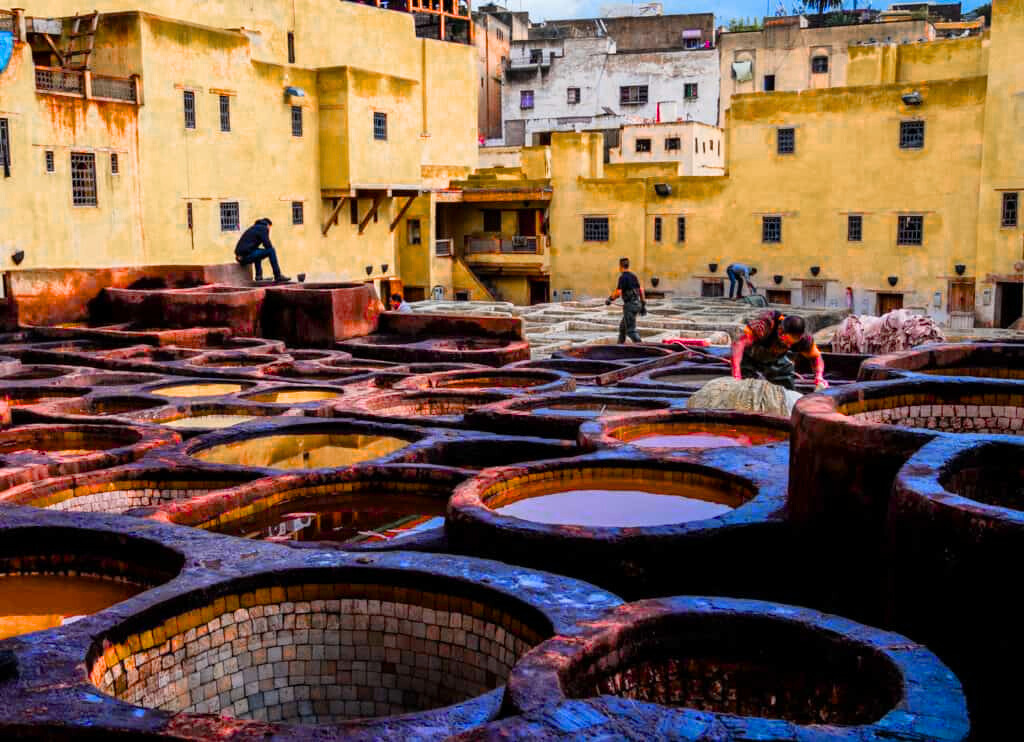
Unlike modern leather factories, the Fès Leather Tannery operates entirely in the open air. Hundreds of stone vats are filled with natural dyes and soaking liquids, and artisans work by hand, following techniques passed down through generations. There is no mechanisation here; every step, from softening hides to dyeing them, relies on human expertise and centuries of knowledge.
The Sights and Smells of Chouara
Approaching the Fès Leather Tannery is a sensory adventure. From surrounding rooftops, visitors see a mosaic of vibrant colours: deep reds, bright yellows, azure blues, and earthy browns in circular stone vats. These colours are produced using natural dyes, reflecting a tradition that has lasted for hundreds of years.
The smell is strong and unmistakable, coming from traditional soaking solutions made of lime, cow urine, and pigeon droppings. While overwhelming at first, local guides often provide fresh mint to hold under your nose. Despite the intensity of the aroma, the sight of leather drying in the sun and artisans at work is mesmerizing.
Nearby streets are lined with finished leather products, from stylish bags and jackets to traditional slippers and belts. Each product tells a story, representing time, skill, and the enduring tradition of the Fès Leather Tannery.
| Attribute | Details |
|---|---|
| Name | Fès Leather Tannery (Chouara Tannery) |
| Location | Fès el-Bali, Fès, Morocco |
| Established | 11th Century (around 900+ years ago) |
| Type | Traditional open-air leather tannery |
| Products | Leather bags, jackets, belts, slippers, poufs |
| Famous For | Handcrafted leather, natural dyes, historical craftsmanship |
| Process | Soaking, softening with natural solutions, dyeing, sun-drying, crafting |
| Visitors | Open to tourists; terraces available for viewing |
| Cultural Significance | Iconic Moroccan heritage site, part of medina’s economy and history |
| Artisans | Multi-generational families preserving traditional techniques |
| Unique Feature | Uses centuries-old handcraft methods with no mechanization |
| Challenges | Strong odor, physically demanding labor, environmental concerns |
How Leather Is Made — The Ancient Way
At the Fès Leather Tannery, leather production remains entirely manual, following techniques that have been used for centuries. The process begins with cleaning and softening hides from sheep, goats, cows, or camels. They are soaked in vats containing water and alkaline mixtures to remove hair and prepare the skin for dye absorption.
After softening, the hides enter the dyeing process. Artisans use natural dyes such as saffron for yellow, indigo for blue, poppy for red, and henna for brown. The hides remain in these vats for days, absorbing deep, vibrant colours.
Once dyed, the leather is laid out to dry in the Moroccan sun, either on rooftops or terraces. Sun drying strengthens the leather and enhances its natural flexibility. Finally, skilled craftsmen transform the hides into high-quality products such as jackets, bags, slippers, poufs, and belts.
This meticulous process can take several weeks, which is why the Fès Leather Tannery leather is so highly prized across the globe.
A Craft That Shaped the City and Economy
The Fès Leather Tannery has long been central to the city’s economic and cultural identity. In medieval times, Fès leather was exported far beyond Morocco, reaching cities like Baghdad, where it was prized for durability and quality.
Even today, the tannery sustains multi-generational families, as many artisans inherit their craft from fathers and grandfathers. This continuity not only preserves tradition but also strengthens the local economy, providing livelihoods to hundreds of families in the medina.
An Authentic Experience for Visitors
Visiting the Fès Leather Tannery is more than a visual spectacle — it is an immersive cultural experience. Tourists often observe the work from balconies above the stone vats, which are accessed via adjacent leather shops. While there is no formal ticket, small tips or purchases are customary to support the artisans.
Photography opportunities are unmatched. The contrast of colourful dye baths against earthy medina walls, combined with artisans at work, creates scenes that feel like living paintings. For the best light, early mornings and late afternoons are ideal to capture the textures and colours of both hides and tools.
Challenges of Traditional Tanning
While beautiful, the work at the Fès Leather Tannery is physically demanding. Artisans often stand barefoot in chemical vats for hours, enduring strong odours and strenuous labour. Despite the craft’s cultural significance, workers typically earn modest incomes comparable to unskilled local jobs.
Environmental challenges also exist. Traditional tanning methods have historically contributed to local water pollution, leading to efforts to improve waste management and drainage systems. Modern initiatives aim to balance heritage preservation with responsible environmental practices.
Leather That Tells a Story
Every product from the Fès Leather Tannery — from jackets to bags and slippers — tells a unique story. Each piece represents centuries of knowledge, tradition, and skilled labour. Visitors can quickly distinguish between authentic handcrafted leather and mass-produced alternatives.
Haggling is common and expected in local markets. Prices reflect both craftsmanship and cultural exchange. Whether purchased at the tannery or surrounding souks, authentic Fès Leather Tannery products are prized for their durability, rich colours, and artisanal value.
The Heart of Morocco’s Artisanal Legacy
In a world dominated by machines, the Fès Leather Tannery is a rare example of timeless craftsmanship. Here, centuries-old techniques continue to thrive, offering visitors a glimpse into the dedication and skill required to produce leather by hand.
The tannery is more than a tourist destination — it is a living legacy. It connects visitors to history, artistry, and the hard work of generations who have perfected this craft. For anyone seeking an authentic Moroccan experience, a visit to the Fès Leather Tannery is truly unmissable.
Final Thoughts
Visiting the Fès Leather Tannery is more than just witnessing a centuries-old craft; it is stepping into a story that spans generations. Each stone vat, each splash of colour, and every piece of leather carries the dedication, skill, and culture of artisans who have honed their craft for hundreds of years. The tannery is a living testament to Morocco’s rich heritage, a place where history, artistry, and human effort converge.
For travellers, historians, or anyone fascinated by traditional crafts, the Fès Leather Tannery offers an experience that is both educational and deeply moving. It reminds us of the value of preserving ancient traditions in a modern world and the extraordinary beauty that arises when human hands and time-honoured techniques shape raw materials into objects of lasting worth.
FAQs
Q: What is the Fès Leather Tannery?
A: The Fès Leather Tannery, also called Chouara Tannery, is a historic open-air workshop in Fès, Morocco, where leather has been crafted by hand for over 900 years.
Q: How is leather made at Fès Tannery?
A: Leather is processed using traditional methods: hides are soaked, softened with natural solutions, dyed with plant-based colors, and dried in the sun before crafting.
Q: Can visitors tour the Fès Leather Tannery?
A: Yes, tourists can observe the process from terraces above the dye pits, often with guides explaining the craft and local mint provided to ease strong odors.
Q: Why is Fès leather famous?
A: Fès leather is prized for its rich natural colors, durability, and centuries-old craftsmanship that preserves traditional Moroccan techniques.
Q: What products come from Fès Leather Tannery?
A: The tannery produces bags, belts, jackets, slippers, poufs, and other handmade leather items, each reflecting authentic Moroccan artisan skill.
