

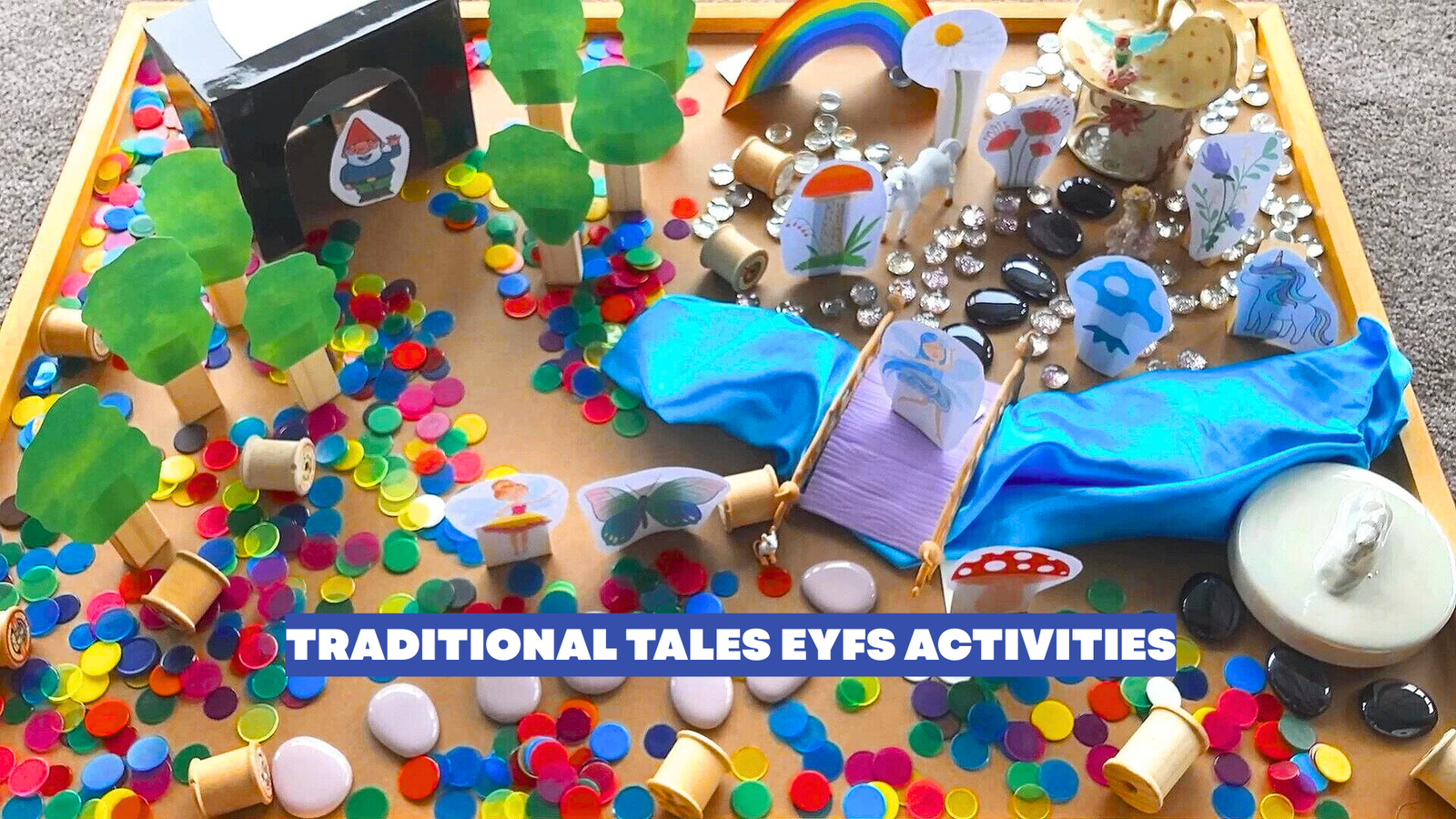
Traditional tales are a core part of Early Years Foundation Stage (EYFS) learning, and when paired with thoughtful Traditional Tales EYFS Activities, they become powerful tools for developing young children’s skills. Stories such as The Three Little Pigs and Little Red Riding Hood are more than just entertaining; they are used to nurture language, creativity, social skills, and emotional growth in children aged 3–5 years. Through carefully designed Traditional Tales EYFS Activities, children can explore stories actively, improving understanding and engagement while having fun.
This article provides a complete guide to using traditional tales effectively in EYFS. It explains why these stories are important, how activities are structured, and practical ways to bring stories to life for young learners. Educators and parents will find actionable insights and ideas for creating meaningful experiences with Traditional Tales EYFS Activities.
Understanding Traditional Tales in Early Years Settings
Traditional tales are stories passed down through generations. They often feature memorable characters, simple plots, and valuable life lessons. Classic stories like Goldilocks and the Three Bears or Jack and the Beanstalk teach morals about kindness, courage, and problem-solving. In the context of EYFS, these stories are used to support communication, literacy, social skills, and emotional development.
By integrating Traditional Tales EYFS Activities into lessons, teachers and parents can transform storytelling into interactive learning. Children engage with the story by acting out parts, sequencing events, or discussing characters. This approach ensures that children connect with the narrative deeply while building essential early years skills in a natural and enjoyable way.
Why Traditional Tales Matter for Young Learners
Traditional Tales EYFS Activities are essential because they tap into children’s natural love of storytelling. When children listen, retell, or act out stories, they practice language skills without even realizing it. Exposure to new vocabulary, sentence structures, and expressions helps children expand their communication abilities.
These tales also stimulate imagination. By exploring magical worlds and interesting characters, children learn to think creatively and inventively. Emotional understanding is another benefit. Many traditional tales involve dilemmas or moral lessons, allowing children to discuss feelings, empathy, and ethical decision-making.
Additionally, story comprehension and sequencing are naturally reinforced through Traditional Tales EYFS Activities. By identifying the beginning, middle, and end of stories, children strengthen early literacy skills. Role-playing and group storytelling also encourage social skills, such as cooperation, empathy, and turn-taking. This combination makes Traditional Tales EYFS Activities a highly effective tool for early childhood development.
| Attribute | Details |
|---|---|
| Name | Traditional Tales EYFS Activities |
| Type | Educational resource / Learning activities |
| Target Age | 3–5 years (Early Years Foundation Stage) |
| Purpose | Develop language, creativity, social skills, and emotional growth |
| Common Stories | Goldilocks, Little Red Riding Hood, The Three Little Pigs, Jack and the Beanstalk |
| Methods | Storytelling, role-play, puppets, sequencing cards, creative drawing |
| Benefits | Literacy, communication, imagination, emotional understanding, teamwork |
| Setting | Classroom or home learning |
| Creator | Teachers, early years educators, educational platforms |
| Social Media | N/A (concept, not a person) |
How EYFS Traditional Tales Activities Are Structured
Traditional Tales EYFS Activities are carefully planned and designed to engage children while supporting learning outcomes. Typically, activities follow a cycle of story introduction, interactive exploration, creative expression, and reflection.
During story introduction, teachers read the tale aloud or use visual aids, like storyboards or videos, to make the narrative accessible. In the interactive exploration phase, children might sequence picture cards, discuss events, or act out story parts. These strategies keep children actively involved in the learning process.
Creative expression is central to Traditional Tales EYFS Activities. Children can draw characters, create puppets, or invent alternative endings. These activities reinforce story comprehension while fostering fine motor skills, creativity, and independent thinking. Reflection and discussion follow, with children sharing ideas about character choices, story events, or lessons learned. This process develops critical thinking, emotional awareness, and effective communication skills.
Popular Traditional Tales for EYFS
Some of the most commonly used stories in EYFS include Goldilocks and the Three Bears, Little Red Riding Hood, Jack and the Beanstalk, The Gingerbread Man, The Three Little Pigs, Hansel and Gretel, Snow White and the Seven Dwarfs, Rapunzel, and The Ugly Duckling.
These tales are ideal for Traditional Tales EYFS Activities because they have simple narratives, engaging characters, and clear moral lessons. By revisiting these stories multiple times, children gain confidence in sequencing events, predicting outcomes, and internalizing the lessons conveyed in the tales. The repetition also strengthens memory, helping children retain vocabulary and story structures.
Practical Ideas for Using Traditional Tales in EYFS
There are many ways to make stories come alive through Traditional Tales EYFS Activities. Story sequencing cards allow children to arrange events in the correct order, reinforcing comprehension and narrative skills. Role-play corners provide children with costumes and props to act out the stories, which encourages communication, collaboration, and confidence.
Puppet-making activities allow children to retell stories creatively while developing fine motor skills. Interactive whiteboards can be used to present story slides or animations, with children actively participating by moving characters or making choices. Older EYFS children can engage in narrative writing, dictating or writing sentences about the story, which builds early writing skills. Moral discussions, meanwhile, help children reflect on lessons learned and explore ethical questions in a supportive setting.
By incorporating these strategies, educators and parents can ensure that Traditional Tales EYFS Activities are engaging, educational, and aligned with developmental goals.
Clarifying the “Profile” Question
It is important to understand that Traditional Tales EYFS Activities are not a person. Some may search online for age, height, net worth, family, or social media associated with this term, but these activities are an educational concept, not an individual.
Any personal details belong to the educators, content creators, or platforms that provide resources for these activities—not to traditional tales themselves. The focus should remain on lesson plans, activity ideas, and storytelling techniques, rather than expecting a personal profile.
Supporting Broader Development Goals
Traditional Tales EYFS Activities are highly versatile and support a broader framework of early childhood development. They improve listening and speaking skills, expand vocabulary, and reinforce comprehension. Socially, children benefit from collaborating with peers through group storytelling, sharing ideas, and engaging in role-play.
Creativity flourishes as children visualize characters, invent story endings, or create props and illustrations. Educators observe that the familiar story structures of traditional tales allow children to revisit them with increasing complexity, promoting sustained engagement and continuous learning.
Conclusion
Traditional Tales EYFS Activities are dynamic educational tools that nurture language, cognitive development, creativity, and emotional intelligence. By incorporating puppetry, role-play, story sequencing, and interactive discussions, children can explore complex ideas in engaging and meaningful ways.
Integrating traditional tales into early years classrooms or home learning provides a joyful, research-backed foundation for lifelong learning. Storytelling remains a timeless method for educating, entertaining, and inspiring young learners, making Traditional Tales EYFS Activities an essential part of early childhood education.
FAQs
Q: What are Traditional Tales EYFS Activities?
A: They are educational activities for children aged 3–5, using classic stories to develop language, creativity, and social skills.
Q: Why are traditional tales important in EYFS?
A: They help children understand story structure, learn new vocabulary, explore emotions, and practice teamwork.
Q: Can these activities be done at home?
A: Yes, parents can read stories, use puppets, role-play, or create sequencing cards to engage children.
Q: Which stories are best for EYFS activities?
A: Classic tales like Goldilocks and the Three Bears, Little Red Riding Hood, The Gingerbread Man, and The Three Little Pigs.
Q: How do these activities support learning?
A: They improve literacy, communication, creativity, emotional understanding, and social skills in a fun, interactive way.
