


Imagine stepping into a room so quiet and free of echoes that even the smallest sound you make feels amplified. You might hear your heartbeat, your breathing, or the faintest movement of blood in your ears. This is the reality of an anechoic chamber — a specially designed space where sound and reflections disappear.
In the UK, anechoic chambers are mostly located in universities and research facilities. They are not typical tourist attractions, but they offer a unique glimpse into the science of sound, acoustics, and advanced research. Planning an anechoic chamber UK visit can be an unforgettable experience for anyone interested in physics, engineering, or sound design.
In this article, we’ll explore what anechoic chambers are, how they work, examples in the UK, what to expect during a visit, and why they are so valuable for research.
What Is an Anechoic Chamber?
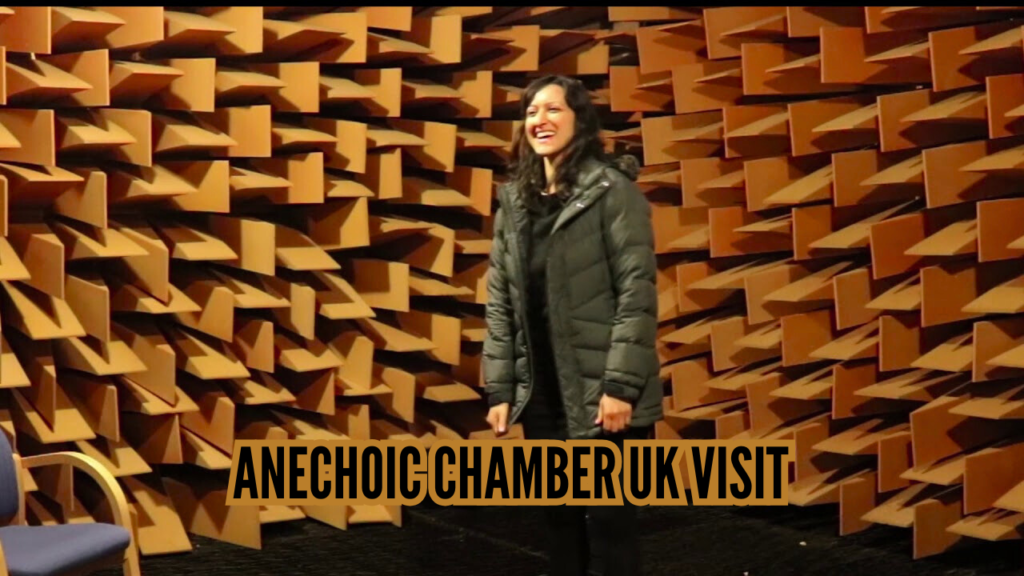
At its simplest, an anechoic chamber is a room designed to eliminate echoes and reflections. The term “anechoic” literally means without echo. Inside, walls, ceilings, and floors are covered with special foam wedges or absorbent materials that trap sound waves instead of reflecting them.
The result is a space of almost total silence, allowing scientists and engineers to conduct tests in a controlled environment. Acoustic anechoic chambers simulate a “free field,” similar to being outdoors with no nearby surfaces to bounce sound. (UCL)
An anechoic chamber UK visit allows students and researchers to experience this remarkable silence firsthand, understanding how precision and design create a near-perfect testing environment. Some chambers are also designed for electromagnetic waves, known as RF anechoic chambers, used to test antennas, radios, and wireless equipment.
How Do Anechoic Chambers Work?
The design of an anechoic chamber is highly technical. Most chambers feature thick walls with multiple layers to reduce outside noise. Foam wedges or other absorbent materials cover every interior surface to prevent sound from bouncing back.
Many chambers have floating floors or mesh platforms, which prevent floor reflections and vibration from interfering with measurements. Some are mounted on vibration-isolating supports to further reduce interference from the building structure. (ISVR)
The combination of these features creates a space where sound travels without reflection, allowing researchers to capture pure acoustic data. A proper anechoic chamber UK visit gives a firsthand understanding of how engineers measure sound with incredible precision.
Anechoic Chambers in the UK
Anechoic chambers in the UK are primarily found in universities, research labs, and specialized facilities. While not open to the general public like museums, they occasionally allow educational visits and professional tours. Planning an anechoic chamber UK visit requires contacting the institution directly.
| Field | Details |
|---|---|
| Name | Anechoic Chamber UK Visit |
| Type | Acoustic & RF Research Facility |
| Purpose | Silence testing, product measurement, research |
| Locations in UK | Southampton, Salford, LSBU, Imperial College, York |
| Access | Limited; educational or research-based visits only |
| Experience | Extreme silence, hearing internal body sounds, observing sound tests |
| Uses | Acoustic experiments, RF testing, product evaluation |
| Ideal Visitors | Students, researchers, engineers, sound enthusiasts |
University of Southampton – ISVR Large Anechoic Chamber
The Institute of Sound and Vibration Research (ISVR) at the University of Southampton has one of the largest acoustic anechoic chambers in the UK. (Southampton University)
Inside this chamber:
- The walls are reinforced concrete with an air gap for sound isolation.
- Thousands of foam wedges cover the walls and ceiling.
- A wire-mesh floor allows safe walking and equipment placement.
- A control room is nearby to monitor experiments.
Researchers use this chamber to test everything from microphone responses to alarm sounds and loudspeaker performance. An anechoic chamber UK visit here can show visitors how engineers perform high-precision measurements in extreme quiet.
University of Salford – Ultra-Quiet Acoustic Chamber
The University of Salford operates a highly regarded anechoic chamber, providing a nearly silent environment for testing products and conducting research. (Salford Acoustics)
Features include:
- Extremely low background noise levels due to multiple layers of sound-absorbing materials.
- Vibration-isolating mounts to reduce interference from the building structure.
- Used for student projects and experiments like rain sound simulation or speaker directivity testing.
Visiting for an anechoic chamber UK visit experience helps students and researchers learn about acoustics in a controlled environment.
London South Bank University – City’s Quietest Room
At London South Bank University (LSBU), the anechoic chamber meets strict British standards for sound testing. (LSBU)
This chamber provides:
- Low noise levels for precise sound power measurements.
- Accurate frequency response tests for devices.
- A controlled environment for acoustic simulations and virtual models.
An anechoic chamber UK visit here can demonstrate to visitors how engineers test and refine sounds for real-world applications.
Imperial College London – RF and Acoustic Chambers
Imperial College London hosts both acoustic and RF anechoic chambers. (Imperial College)
- The acoustic chamber provides an extremely quiet environment for device characterization and research.
- The RF chamber absorbs electromagnetic waves for antenna and wireless device testing.
Scheduling an anechoic chamber UK visit at Imperial College gives a dual perspective of sound and radio-frequency testing in one facility.
AudioLab at York Science Park
The AudioLab anechoic chamber in York is another key UK research facility. (AudioLab)
- Designed for precise acoustic experiments.
- Equipped with speaker arrays and dummy heads for sound measurement.
- Supports postgraduate research and acoustic database creation.
An anechoic chamber UK visit to York allows students and enthusiasts to witness cutting-edge sound testing firsthand.
Visiting an Anechoic Chamber in the UK
Most UK anechoic chambers are not open to the general public, but visits can sometimes be arranged through:
- University outreach programs.
- Research collaborations for students or professionals.
- Special educational demonstrations. (Southampton University)
During an anechoic chamber UK visit, visitors can see how precise instruments measure sound, and how researchers maintain a completely controlled environment.
First Impressions
Entering an anechoic chamber can feel strange or unsettling. You may hear your own internal sounds, like heartbeat or breathing, in the silence. An anechoic chamber UK visit makes this experience tangible and unforgettable.
What You’ll See
Guided tours often include:
- Observation of scientific test setups.
- Demonstrations of microphone calibration and sound testing.
- Explanations of how researchers use the chamber for accurate measurements.
Safety and Access
- Access is strictly controlled.
- Visitors may need protective gear and follow rules to avoid disturbing sensitive equipment.
- An anechoic chamber UK visit is educational, not recreational, emphasizing learning and research.
Why Anechoic Chambers Matter
Anechoic chambers are essential for:
- Product testing, including microphones, speakers, hearing aids, and small devices.
- Standards compliance, ensuring products meet international acoustic requirements.
- Scientific research, from auditory studies to vibration analysis.
- RF and wireless testing, for antennas and electromagnetic devices. (Wikipedia)
An anechoic chamber UK visit demonstrates how silence is used to measure, understand, and refine sound, which is impossible in ordinary spaces.
Final Thoughts
Anechoic chambers are extraordinary spaces where science, silence, and sound converge. In the UK, access is mostly limited to students, researchers, and professionals, but educational visits are sometimes possible.
Experiencing an anechoic chamber UK visit offers a rare glimpse into controlled silence and shows the precision required in modern acoustic research. For anyone passionate about sound, physics, or engineering, an anechoic chamber UK visit is an experience they will never forget.
FAQs
Q: What is an anechoic chamber?
A: An anechoic chamber is a room designed to absorb sound and eliminate echoes, creating an almost perfectly silent environment.
Q: Can the public visit anechoic chambers in the UK?
A: Most are in universities and research labs, so public visits are rare and usually require educational or research arrangements.
Q: What will I experience during an anechoic chamber UK visit?
A: Visitors experience extreme silence, hear internal body sounds like heartbeat, and see how scientists test sound and devices.
Q: Why are anechoic chambers important?
A: They allow precise testing of sound equipment, hearing devices, speakers, and RF antennas in a controlled, echo-free space.
Q: How can I arrange an anechoic chamber UK visit?
A: Contact universities or research facilities directly, often through outreach programs, student projects, or professional research partnerships.
