

Introduction to Fossils
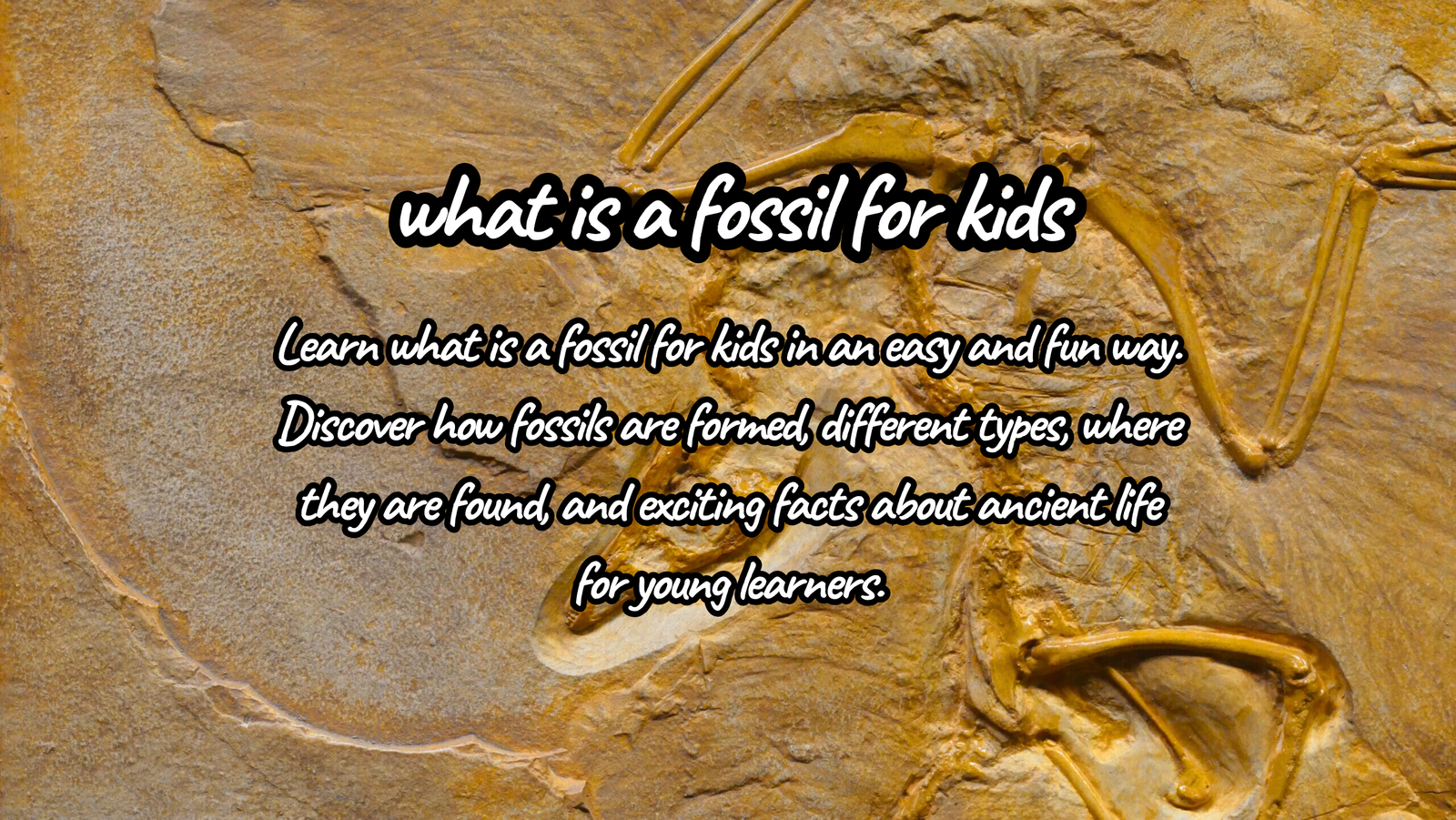
Have you ever held a rock and wondered if it might have a secret story from the past? That is exactly what a fossil is — a preserved piece or trace of something that lived a very long time ago. In this article, we will explore what is a fossil for kids, showing examples like bones, shells, footprints, leaves, or even tiny insects trapped in amber. Fossils are often found in rocks and tell amazing stories about life on Earth millions of years ago.
Fossils are like nature’s time machines. They allow scientists, called paleontologists, to look into the past and understand how animals, plants, and even entire landscapes used to be. For kids, learning what is a fossil for kids is a fun way to uncover the mysteries of ancient life. Fossils are not just rocks; they are clues to a giant history puzzle that reveal how life has changed over millions of years.
What Exactly Is a Fossil?
A fossil is any remains or evidence of ancient life preserved in rock or other materials. When we ask what is a fossil for kids, it is helpful to explain that this includes bones, teeth, shells, leaves, footprints, and even imprints of soft tissues. Fossils are typically very old, ranging from thousands to millions or even billions of years.
The word fossil comes from the Latin fossilis, meaning “dug up”. Most fossils are discovered after digging or erosion exposes them in rocks and soil. When kids learn what is a fossil for kids, they understand that every fossil tells a story about the past, giving a glimpse into the world as it once was.
Why Fossils Are Important
Fossils are crucial because they teach us about life from long ago. Understanding what is a fossil for kids helps young learners discover what kinds of animals and plants lived on Earth, how climates and landforms changed, and how species evolved over time. Without fossils, we would not know much about dinosaurs, prehistoric forests, ancient oceans, or other ecosystems.
Fossils are like history books written in stone. Each bone, footprint, or leaf tells a small piece of the story of our planet. By learning what is a fossil for kids, children can see how scientists reconstruct extinct creatures, figure out how they moved, what they ate, and even how they interacted with each other.
How Fossils Are Formed
Not everything that dies becomes a fossil. Fossilization is a rare and slow process that usually takes thousands or millions of years. When teaching what is a fossil for kids, it is important to explain that a plant or animal must die and be quickly buried in mud, sand, or soil to protect it from decay and scavengers.
Over time, minerals from the surrounding sediment replace the original parts of the plant or animal. Eventually, the sediment hardens into rock, and the remains are preserved as a fossil. In some cases, small animals or insects get trapped in sticky tree sap, which eventually hardens into amber, preserving them almost perfectly for millions of years. This process shows kids why learning what is a fossil for kids is so exciting — each fossil is a preserved story from the past.
| Attribute | Details |
|---|---|
| Topic | What is a Fossil for Kids |
| Definition | Remains or traces of ancient plants, animals, or insects preserved in rocks or amber |
| Age Range | Millions to billions of years |
| Type | Body fossils, trace fossils, amber fossils, microfossils |
| Importance | Helps kids learn about ancient life, evolution, and Earth’s history |
| Found In | Rocks, riverbeds, cliffs, deserts, beaches |
| Studied By | Paleontologists |
| Fun Fact | Fossils can preserve footprints, skin patterns, feathers, and even insects |
Different Types of Fossils
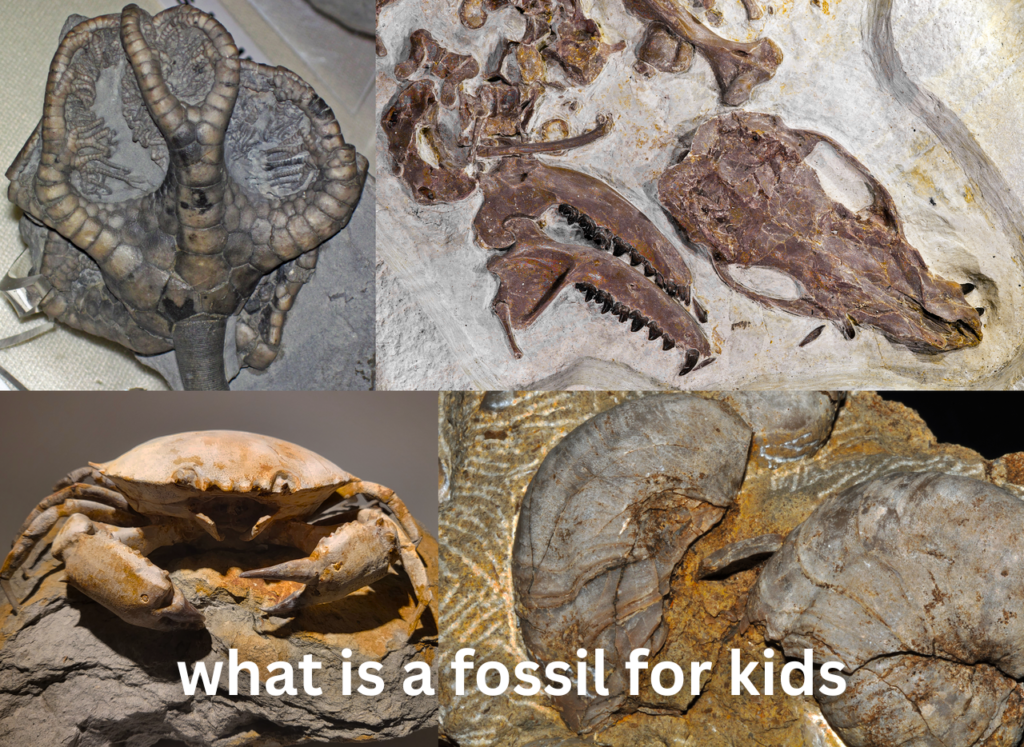
Fossils are not all the same; they can vary greatly depending on how they were preserved. Body fossils are the actual remains of organisms, such as bones, teeth, shells, or tree trunks. They give direct evidence of what an organism looked like.
Trace fossils are not parts of the organism itself but evidence of their activity, such as footprints, burrows, nests, or eggs. When kids ask what is a fossil for kids, they can learn that even these traces teach us about behavior, movement, and life in the past.
Some fossils are preserved in amber, where insects or plant parts are trapped in tree resin that hardens over time. Microfossils are extremely small, like pollen grains or tiny microorganisms, that require a microscope to study. Learning what is a fossil for kids helps children understand the many ways fossils can be preserved.
Where Fossils Are Found
Fossils can be found all around the world. They are most commonly discovered in sedimentary rocks, which form from layers of mud, sand, and sediments. When teaching what is a fossil for kids, it’s fun to show examples from riverbeds, cliffs, deserts, and even beaches.
Even ordinary-looking rocks can hide amazing fossils waiting to be discovered. Every fossil tells a story about Earth’s past and the life that once thrived there. Many fossils are millions of years old, giving scientists and children a timeline of life stretching far beyond human history.
What Fossils Teach Us
Fossils are more than just old bones or stones. They provide clues about how animals lived, what they ate, how they moved, and how they interacted with their environment. When kids learn what is a fossil for kids, they understand that teeth can show diet, footprints reveal movement, and burrows show habits.
Some fossils even preserve skin patterns, feathers, or plant leaves, helping scientists study details about anatomy and behavior. Fossils also show how life adapted to changes in climate and environment over millions of years. By learning what is a fossil for kids, children can see how evolution, survival, and extinction are all connected to our planet’s story.
Fun Facts About Fossils
Fossils can be incredibly old. Some of the earliest fossils are more than 3.5 billion years old. Dinosaur footprints, amber-trapped insects, and even fossilized poop (called coprolites) provide fascinating clues about ancient life. Fossils are found on every continent, including Antarctica.
Shark teeth are among the most common fossils ever discovered, and tiny pollen grains help scientists understand prehistoric climates. Fossils are sometimes so detailed that they show patterns on skin, wings, or feathers. When kids learn what is a fossil for kids, they discover that fossils are full of secrets waiting to be explored.
Why Kids Should Learn About Fossils
Fossils make learning fun and hands-on. Kids can discover how life looked millions of years ago, learn about extinct animals and ancient plants, and even try their hand at fossil hunting. Teaching what is a fossil for kids encourages curiosity, observation, and problem-solving skills.
Studying fossils helps children ask questions, be curious, and develop a deeper appreciation for nature. It also connects them to the past, showing the importance of preserving life and the environment. Fossils are more than rocks — they are keys to exploring history in a fun and exciting way.
Conclusion
Fossils are amazing reminders of Earth’s incredible history. They show us animals, plants, and landscapes from millions of years ago and provide clues about how life has evolved. From dinosaur bones to tiny pollen grains, every fossil has a story to tell.
For kids, fossils are not just old stones. Learning what is a fossil for kids shows them that fossils are nature’s clues, time machines, and history books all in one. Understanding fossils allows children to connect with the past, explore the mysteries of life, and understand how the world has changed over millions of years. Fossils make science exciting, educational, and full of adventure.
FAQs
Q: What is a fossil for kids?
A: A fossil for kids is a remnant or trace of a plant, animal, or insect that lived millions of years ago, preserved in rocks or amber.
Q: How do fossils form?
A: Fossils form when animals or plants are buried quickly in mud, sand, or soil, and over time, minerals replace their original parts.
Q: Why are fossils important for kids to learn?
A: Fossils help kids understand ancient life, evolution, and Earth’s history in a fun and educational way.
Q: Where can kids find fossils?
A: Fossils can be found in rocks, cliffs, riverbeds, deserts, and beaches around the world.
Q: Who studies fossils?
A: Fossils are studied by paleontologists, scientists who explore ancient life to learn about the past.
